


Databricks: the lakehouse platform for your data and AI

Discover Databricks, the lakehouse platform for data and AI
Databricks is a unified data and AI platform built on the lakehouse, combining the flexibility of a data lake with the performance of a data warehouse.
Data engineers, analysts and data scientists work on the same platform and the same data: pipelines feed dashboards, which feed machine learning models, with no duplicate copies or technical silos. Databricks runs on the major clouds: AWS, Azure and Google Cloud.
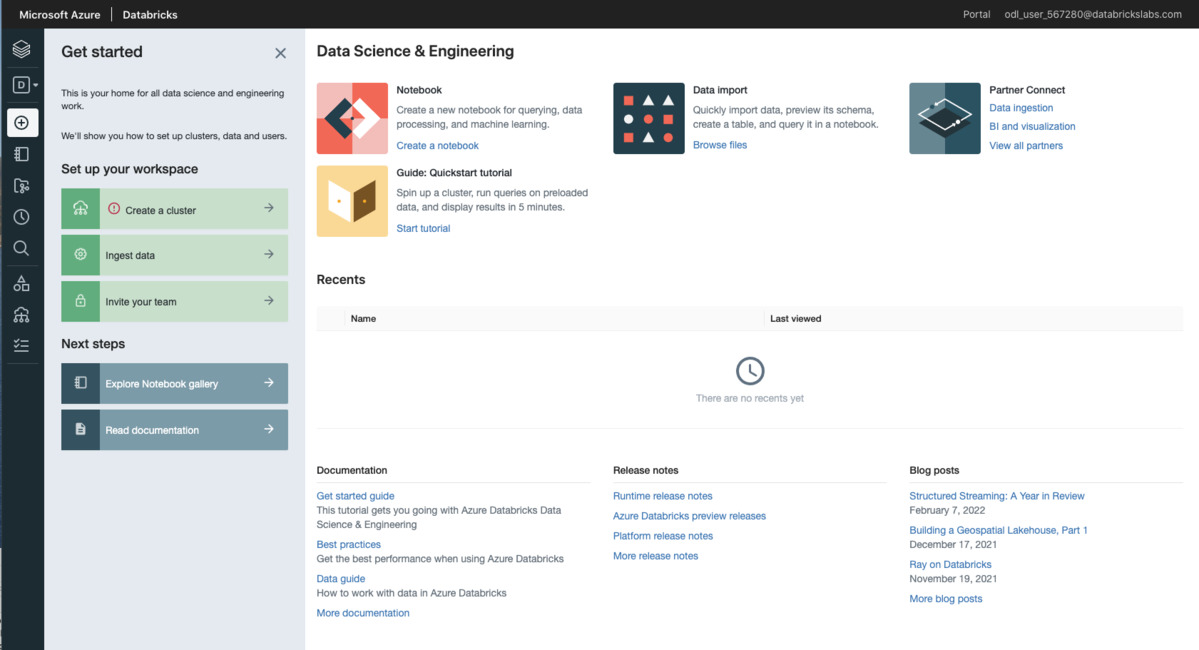
Databricks is built around four pillars:
One platform to ingest, transform, analyse and model your data.
1. The lakehouse: a single foundation for all your data
All your data, structured or not, in one reliable environment.
- Store structured, semi-structured and unstructured data in one place
- Make your data lake reliable with Delta Lake transactions
- Avoid duplication between data lake and warehouse
- Keep your data in your own cloud environment
2. Data engineering: pipelines at scale
The platform grew out of Apache Spark, created by the founders of Databricks.
- Build batch and streaming pipelines at scale
- Harness the power of Apache Spark without managing clusters by hand
- Orchestrate and monitor your jobs with built-in workflows
- Process massive volumes with automatic scaling
3. SQL analytics and BI: the lakehouse open to analysts
No need to copy data into a separate warehouse to analyse it.
- Query the lakehouse in SQL with dedicated warehouses
- Plug in your BI tools such as Power BI or Tableau
- Build dashboards and alerts directly in the platform
- Give analysts direct access to fresh data
4. Machine learning and generative AI: from prototype to production
The entire model lifecycle is managed on the platform.
- Develop and train your models in collaborative notebooks
- Track, version and deploy your models with MLflow
- Build generative AI applications on your own data
- Move from prototype to production without changing environments
What about governance?
With Unity Catalog, Databricks centralises governance: a unified data catalogue, permission management, lineage and auditing. A key point when several teams share the same platform.
Planning a Databricks project? turnK designs your lakehouse platform and industrialises your AI use cases. Take a look at our Data and AI services or contact us: our consultants reply within 48 hours.
Frequently asked questions.
Databricks is a unified data and AI platform built on the lakehouse concept, which combines a data lake and a data warehouse. It covers data engineering, SQL analytics, machine learning and generative AI.
Organisations handling significant data volumes that want to bring data engineers, analysts and data scientists together on one platform. It is especially well suited to projects combining data pipelines and machine learning.
The lakehouse with Delta Lake, batch and streaming pipelines powered by Apache Spark, SQL analytics connected to BI tools, machine learning with MLflow and centralised governance with Unity Catalog.
Databricks is billed on usage, based on compute units consumed, plus the cost of the underlying cloud infrastructure (AWS, Azure or Google Cloud). Up-to-date pricing is available on the official Databricks website.
The two platforms are converging, but Databricks remains stronger on data engineering and machine learning, while Snowflake shines for SQL warehousing simplicity and data sharing. turnK helps you decide based on your use cases and teams.
