


.jpeg)
Developer Crisis: no-code Tools as Solution?

In a world increasingly focused on technology, the demand for skilled IT developers has never been higher. However, this growing demand is also creating a talent shortage, which poses a major challenge for many companies. The developer shortage is estimated to reach 85.2 million professionals by 2030, requiring innovative solutions to bridge the supply-demand gap. This is where no-code and low-code tools come into play.
In this article, we will explore the possible evolution of the development chain, the reasons for the shortage of developers, and how No-code tools can be a promising solution to solve this problem. The current state of development and forecasts for the future
- The growing demand for IT developers and challenges for businesses.
- Statistics on the number of current developers and projections for 2030.
- The reasons for the expected shortage and its potential consequences.
The causes of the developer shortage
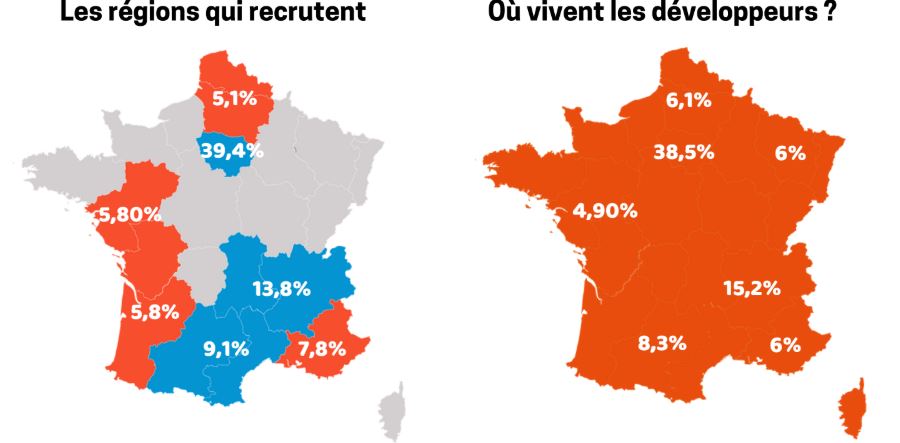
- Rapid expansion of digital technologies and industries.
- Insufficient education and training in computer development.
- Increased competition to attract the best talent.
- Problems with developer retention and retention.
No-code and low-code tools as a solution
- What is no-code and low-code, and how do they work?
- The advantages of no-code and low-code tools for non-developers.
- The appropriate limitations and usage scenarios of no-code tools.
Impacts of no-code tools on the development industry
- The automation of repetitive tasks and the acceleration of the development process.
- The democratization of application creation and user empowerment.
- The implications for professional developers and the skills needed in the future.
Prospects for the future of development with no-code tools
- The challenges and opportunities of widespread adoption of no-code tools.
- The evolution of the role of developers and new career opportunities.
- Forecasts of the long-term impact of no-code tools on the labour market.
As the shortage of IT developers continues to grow, No-code and low-code tools offer a glimmer of hope to bridge the gap between demand and the supply of coding skills. By simplifying the application development process and enabling non-developers to create technology solutions, these tools open up exciting new perspectives. However, it is essential to find a balance between the use of no-code tools and the need for more advanced coding skills. Ultimately, the future of development will depend on the collaboration between traditional developers and users of no-code tools, in order to meet the technological challenges of tomorrow.