


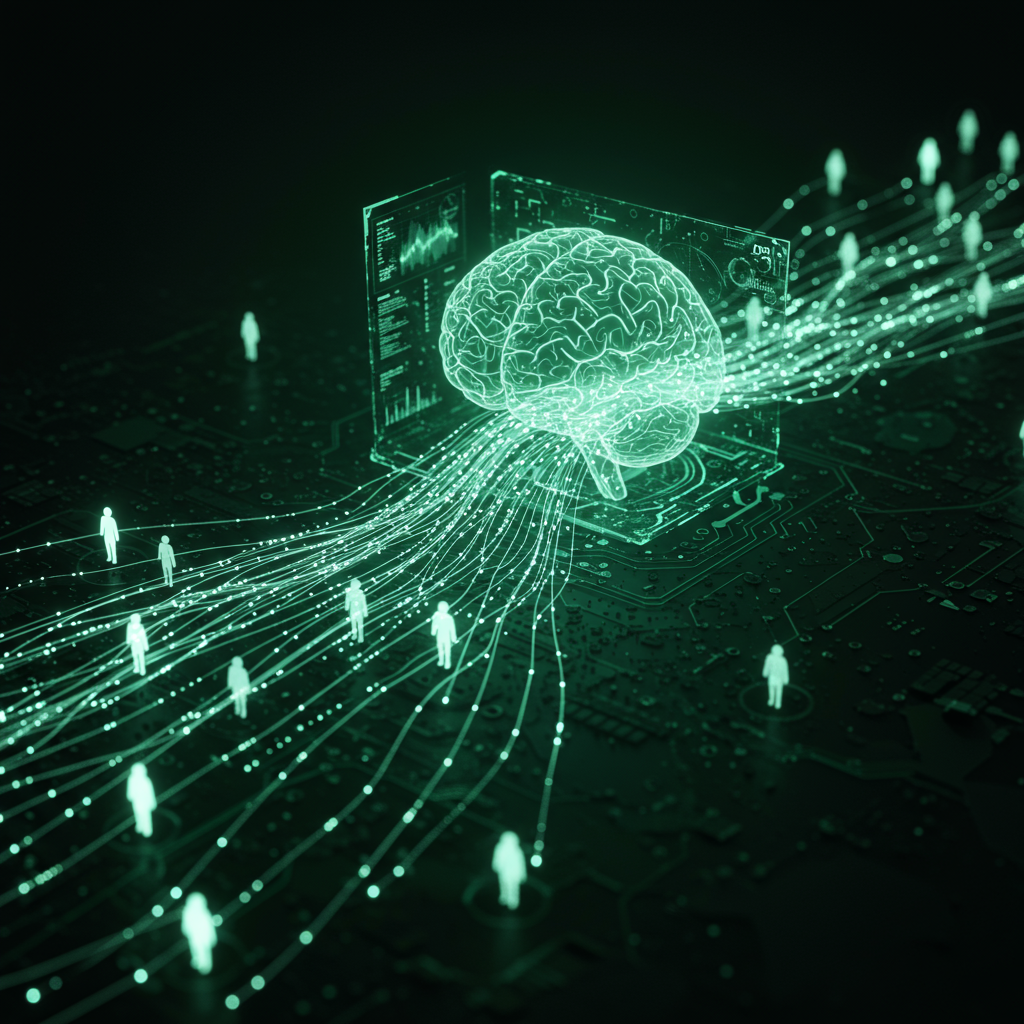
Marketing task automation in 2026
Marketing automation in 2026: towards hyper-personalization driven by AI
The world of digital marketing is evolving at a rapid speed. In 2026, marketing automation will no longer be a simple option, but an absolute necessity for any company wishing to remain competitive. Far from generic email campaigns of yesteryear, we are entering an era where artificial intelligence (AI) and data analytics are radically transforming the way brands interact with their customers. As integrators specialized in CRM, Marketing Automation and ERP, we observe and shape these evolutions for our partners.
Why is automation crucial to your marketing strategy in 2026?
In an increasingly dense digital environment, capturing attention and retaining a customer is a constant challenge. Marketing automation helps streamline repetitive processes, customize customer experience on a large scale, and optimize resource allocation. It transforms the management of advertising campaigns, the nurturing of leads and even content writing, freeing up valuable time for your marketing teams to focus on strategy and creativity. The objective is clear: to improve overall performance and support the growth of the company.
The pillars of marketing automation in 2026: AI and Data
The future of automation is based on two fundamentals: artificial intelligence and intelligent data exploitation. AI no longer just automates simple tasks; it analyzes user behaviors, predicts trends, and optimizes customer journey in real time. For example, an AI agent for CRM will be able to anticipate a customer’s needs and suggest the best business action or the most relevant content. This ability to process huge volumes of data allows for truly data-driven marketing, where every decision is supported by facts.
Current marketing automation tools, such as HubSpot or Salesforce Pardot, are incorporating more and more AI-based features. These platforms allow for complex lead nurturing scenarios, ultra-precise lead scoring and optimization suggestions for your campaigns. Personalization becomes the norm: from dynamic content on your homepage to emails adapted to the previous interactions of the prospect, each point of contact is unique.
Concrete applications: from lead generation to customer experience
The impact of automation is felt at every stage of the customer journey:
- Lead and nurturing generation: Smart chatbots qualify prospects 24/7, while automated email sequences offer targeted content (lead magnet, product sheets) to advance leads in the conversion tunnel. Lead scoring, refined by AI, ensures that sales teams focus on the most promising opportunities.
- Content Marketing: AI helps identify topics of interest, optimize SEO writing, and even generate content drafts. The distribution is also automated, ensuring that the right content reaches the right person at the right time, whether through social marketing or blog posts. This is the essence of an effective content marketing strategy.
- Customer experience optimization: Automation allows proactive customer tracking. For example, if a customer encounters a problem, a ticket can be automatically created in the CRM and climbed to the right service. Loyalty campaigns can be triggered on the basis of specific behaviors, offering personalized incentives to strengthen the relationship and encourage cross-sell or upsell. A pragmtic approach to marketing automation makes it possible to move from theory to action successfully.
- SEO: Automated analysis of your website’s performance, regular website auditing, and real-time adjustments to metas and keywords become the norm. Advanced SEO tools, integrated into your strategy, can identify opportunities for improvement for website SEO and organic traffic. If you are considering a website redesign, now is the time to incorporate these considerations from the design phase.
Systems integration: the nerve of war
For successful marketing automation in 2026, the smooth integration of your various tools is essential. A robust CRM like Salesforce or HubSpot Customer Relationship Management must be the heart of your ecosystem. It must communicate seamlessly with your marketing automation platform, Enterprise Resource Planning (ERP) for operational data management, and even your customer support tools. This synergy allows a 360-degree view of the customer, avoiding data silos and ensuring consistency in all interactions. To optimize the visibility of your site and its user experience, a website redesign may be necessary, by integrating from the beginning the best SEO and UC/UI practices.
The expertise of a marketing agency or specialized integrator is crucial to orchestrate this complexity. They will help you define your digital strategy, choose the right solutions (Salesforce, HubSpot, Pardot, etc.), configure and integrate them, ensuring that your system works like a well-oiled machine. The goal is to move from simple task automation to true process automation, where the entire company benefits from increased efficiency.
Prepare your business for the future
The year 2026 is fast approaching, and with it, ever-higher requirements for marketing efficiency and personalized customer experience. Marketing automation, boosted by AI, is not a passing trend but a profound transformation of practices. It offers unparalleled opportunities to optimize your campaigns, build customer loyalty and drive growth.
Don’t let your company go late. It’s time to evaluate your current infrastructure, identify automation opportunities, and equip yourself with the tools and skills needed to embrace this revolution. Contact the turnK agency. Our experts are here to support you in defining your strategy, integrating CRM, Marketing Automation and ERP solutions tailored to your needs, and transforming your marketing approach for years to come.
the most common questions
Generative AI, real-time personalization and unified data.
It generates content, optimizes campaigns, and predicts behaviors.
Yes, but enriched with predictive intelligence and AI connectors.
Automate without control: the human remains necessary to keep the meaning and coherence.