


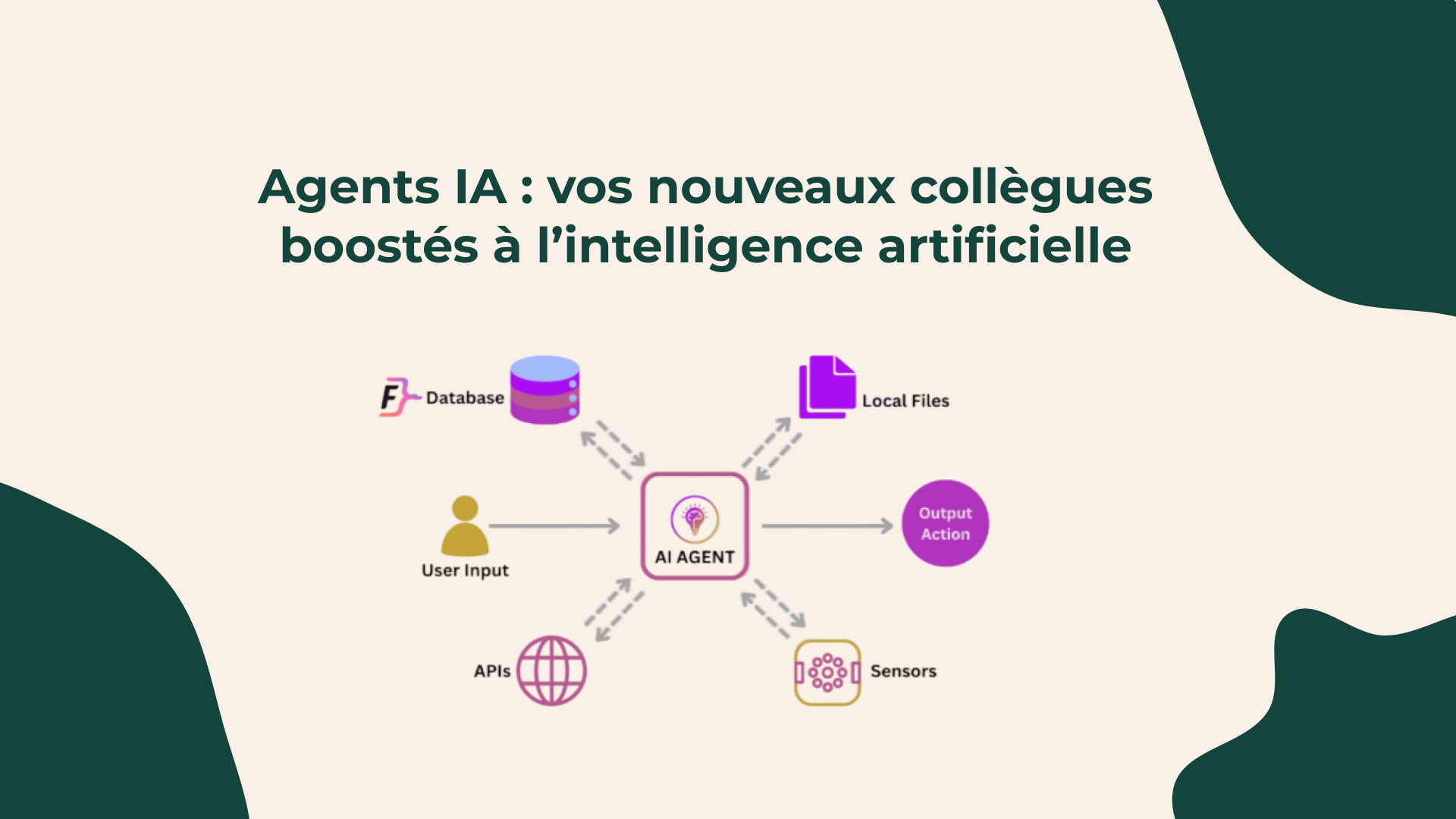
Agents AI: your new colleagues boosted to artificial intelligence
What is an AI agent?
An AI agent is software designed to understand context, make decisions and carry out specific tasks with a degree of autonomy. Unlike a basic chatbot or fixed automation, an agent can use data, tools and feedback to determine its next action.
How AI agents support businesses
- Automate repetitive, low-value tasks.
- Structure and enrich operational data.
- Assist employees during daily activities.
- Analyze information and generate recommendations.
- Interact with CRM, ERP and specialist business tools.
A structured implementation approach
1. Assessment and advisory
Review current processes, identify operational pain points and define appropriate AI use cases, models and architecture.
2. Integration
Build agents for support, recommendations, analysis or prediction and connect them securely with existing data and systems.
3. Continuous improvement
Monitor performance, improve models, maintain documentation and update the roadmap as business needs evolve.
Example use cases
Industrial agents can analyze IoT signals and trigger maintenance workflows. Real-estate agents can qualify leads, recommend properties and prepare personalized follow-up. Similar patterns apply to e-commerce, healthcare and customer service.
Governance remains essential
Successful agents require reliable data, controlled permissions, human oversight, secure hosting and measurable performance targets.
the most common questions
An AI agent is autonomous software that interprets information, makes decisions and performs actions for a defined business purpose.
It can automate tasks, analyze data, support decision-making, assist employees and interact with connected business applications.
AI agents are used in industry, real estate, e-commerce, healthcare, customer service and many other sectors.
Start with an audit, define a controlled use case, integrate required systems, test with users and monitor performance continuously.